

Understanding the Stages of Alcohol Intoxication
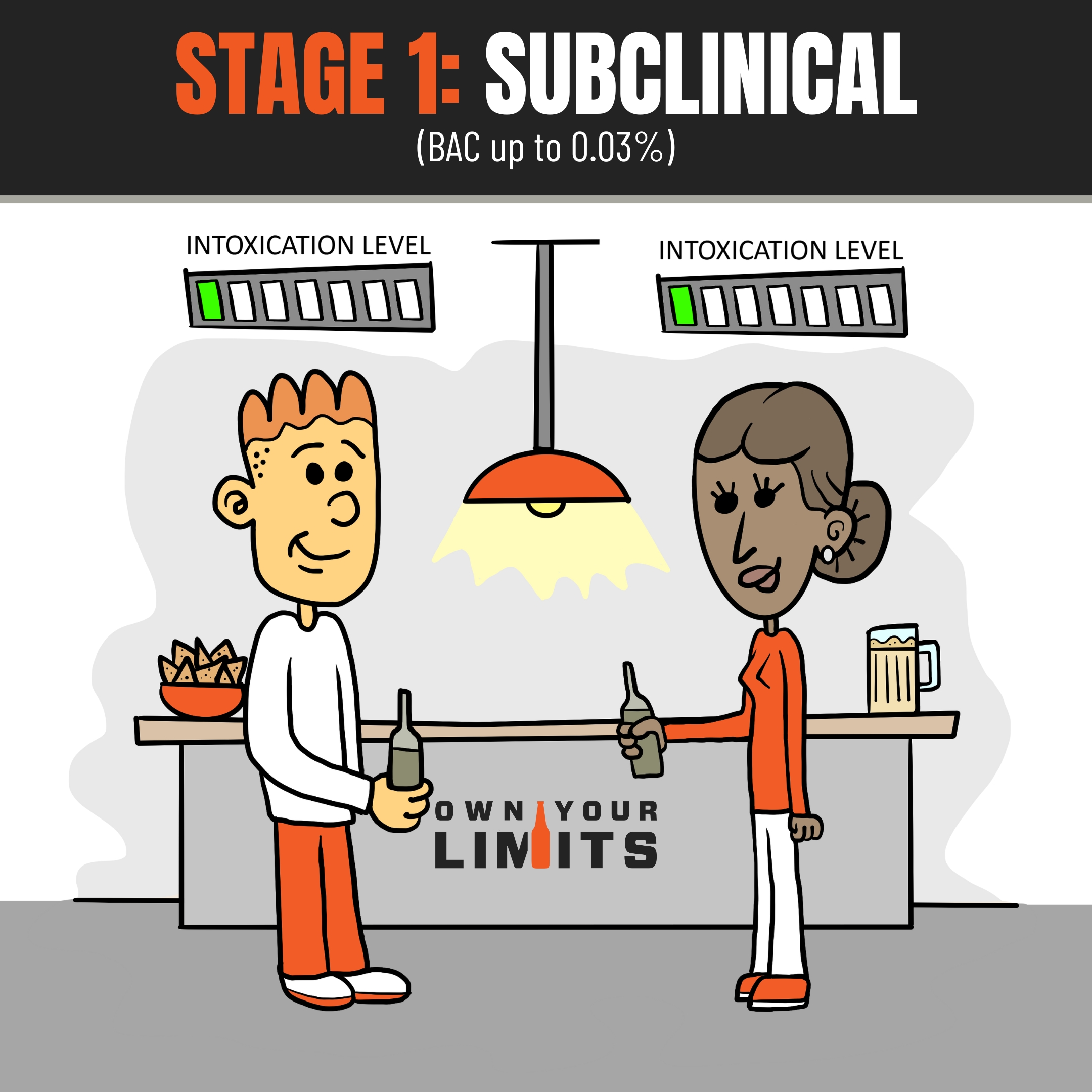
- Minimal (or no) observable effects.
- Reaction time, behavior and judgment may be slightly altered.
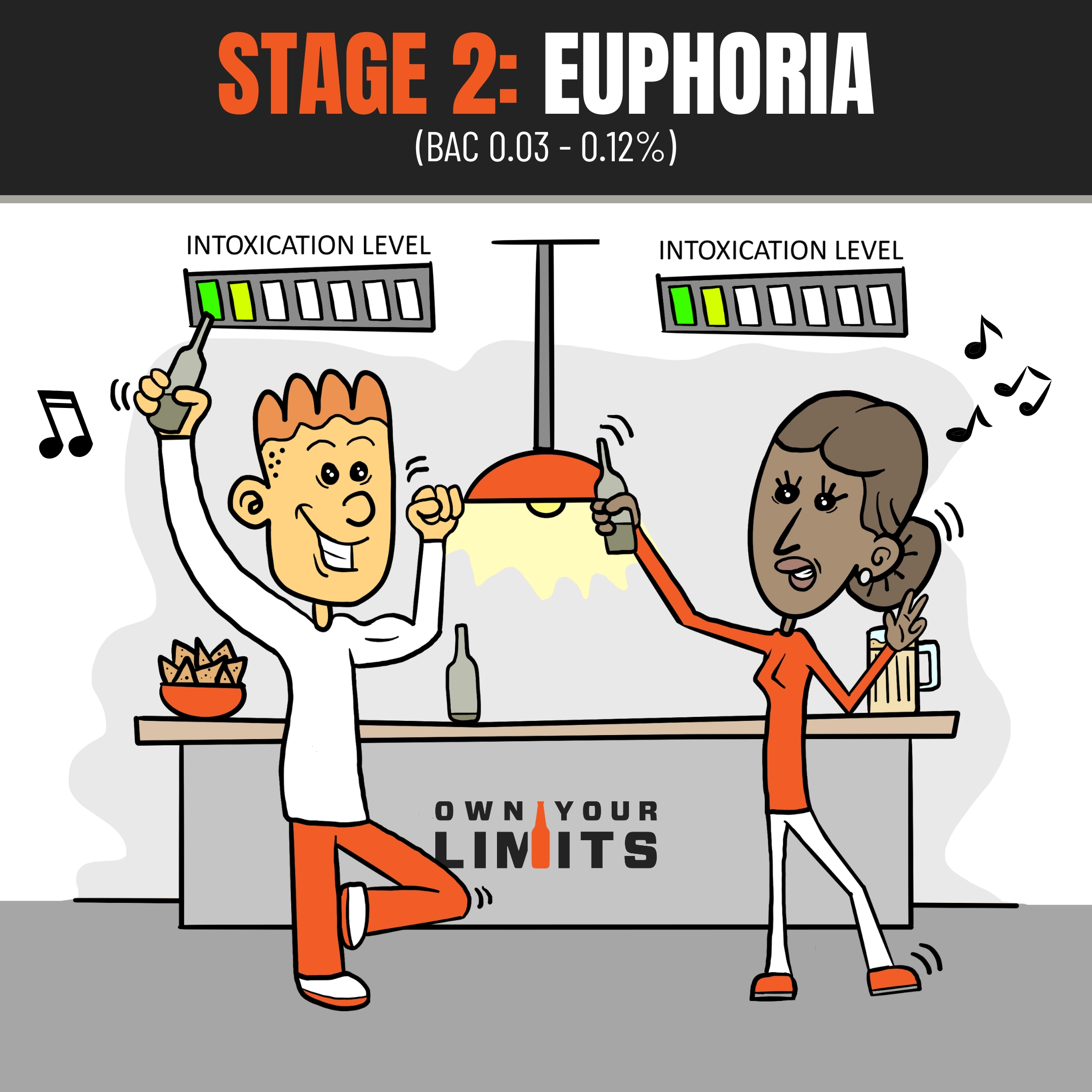
- Elevated mood.
- Increased self-confidence.
- Impaired judgment.
- Decreased inhibitions.
- Impaired reasoning and memory.
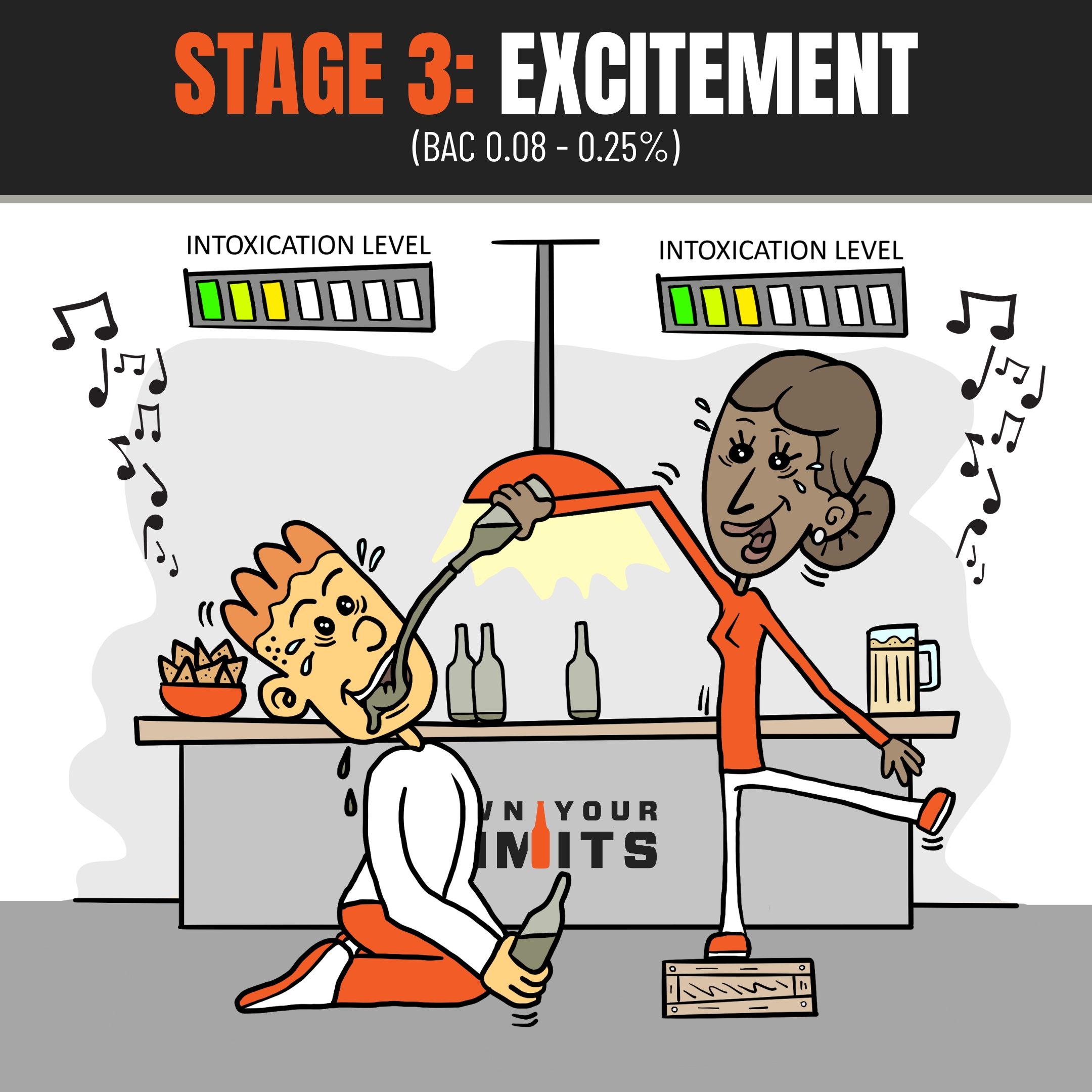
- Legally intoxicated.
- Emotional instability.
- Loss of critical judgment.
- Impairment of memory and comprehension.
- Decreased sensory response.
- Increased reaction time.
- Possible mood swings and/or nausea or vomiting.
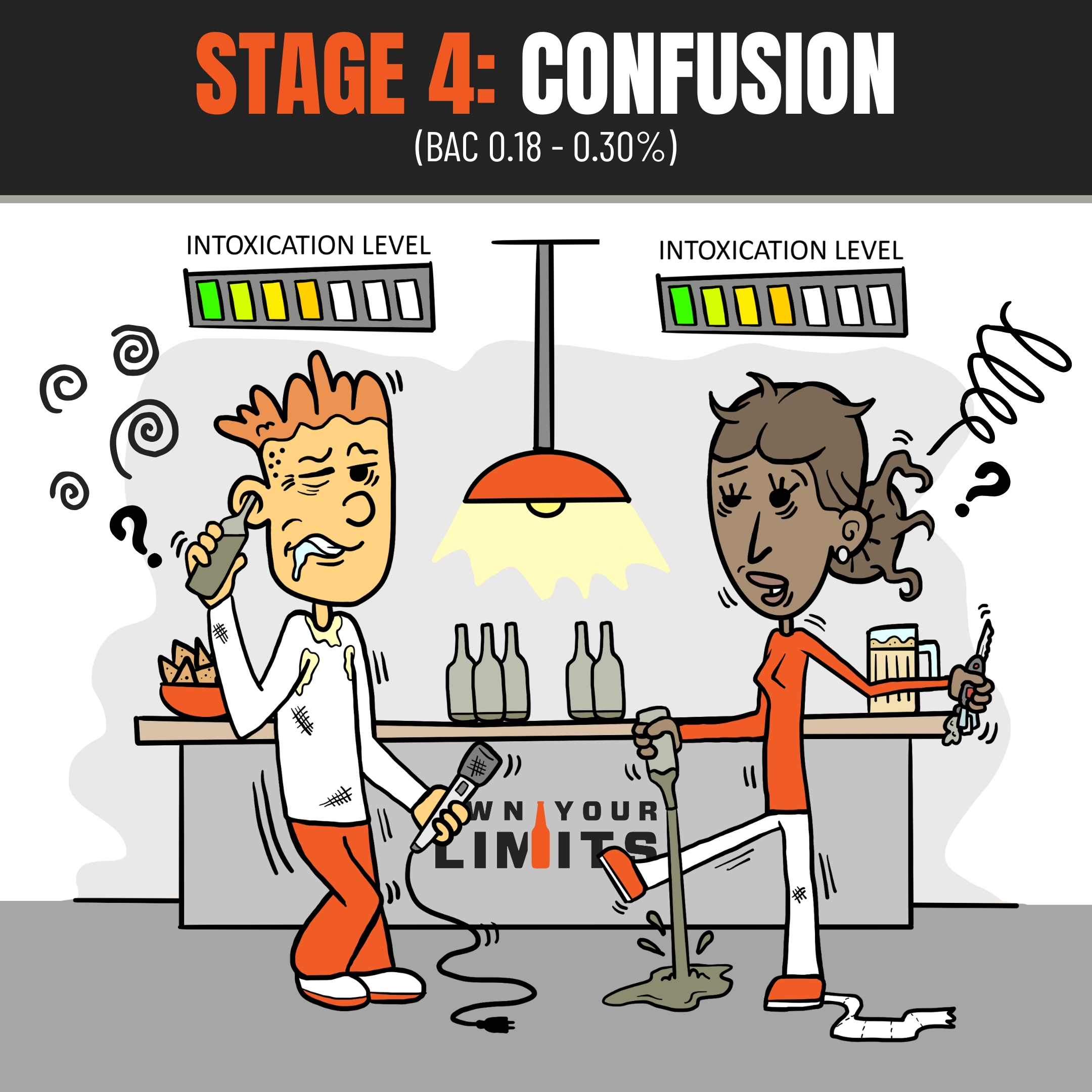
- Severe motor impairment.
- Confusion.
- Dizziness.
- Temporary loss of consciousness or short-term memory (“blackouts”).
- Needing assistance to walk.
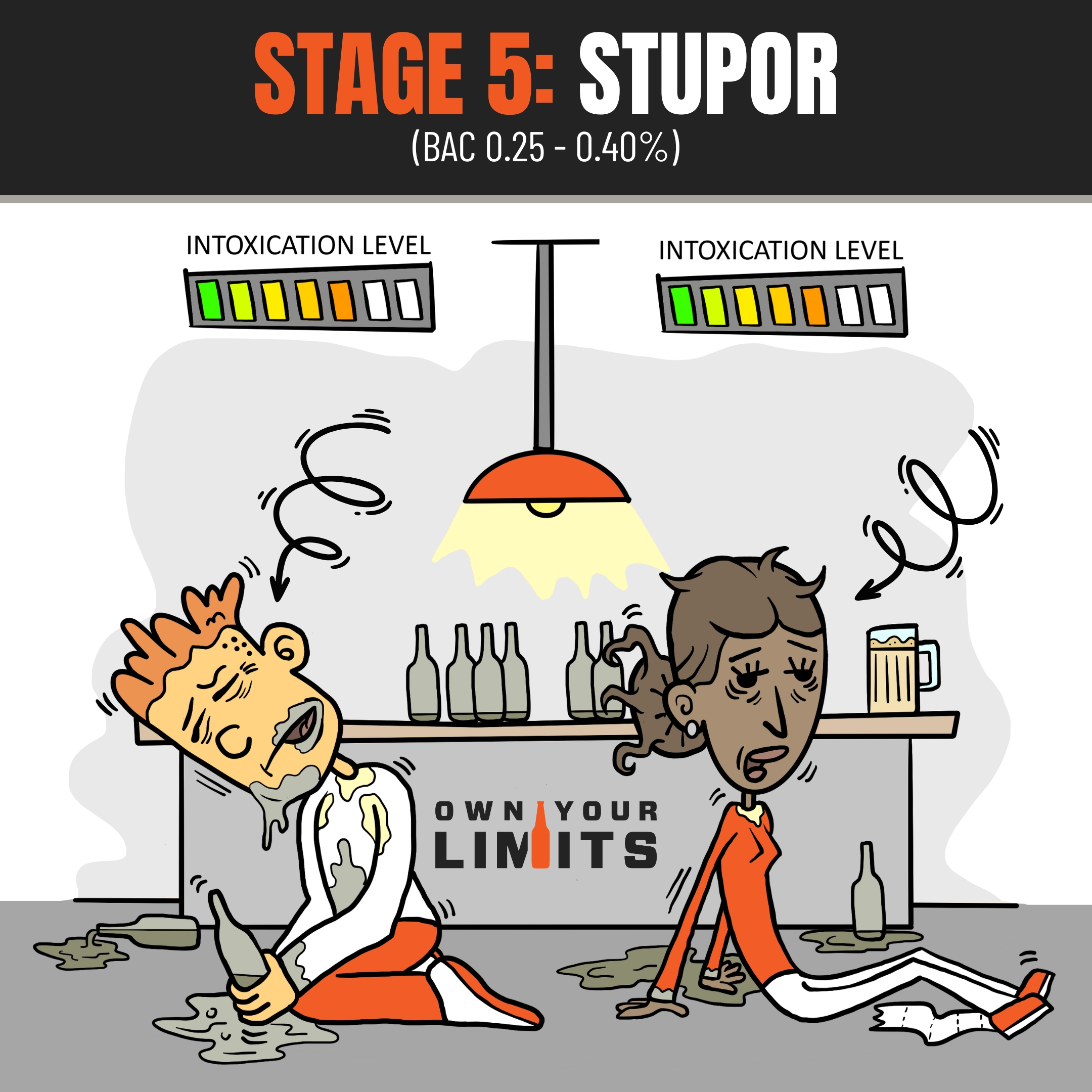
- Barely conscious.
- Inability to stand or walk.
- Vomiting.
- Incontinence.
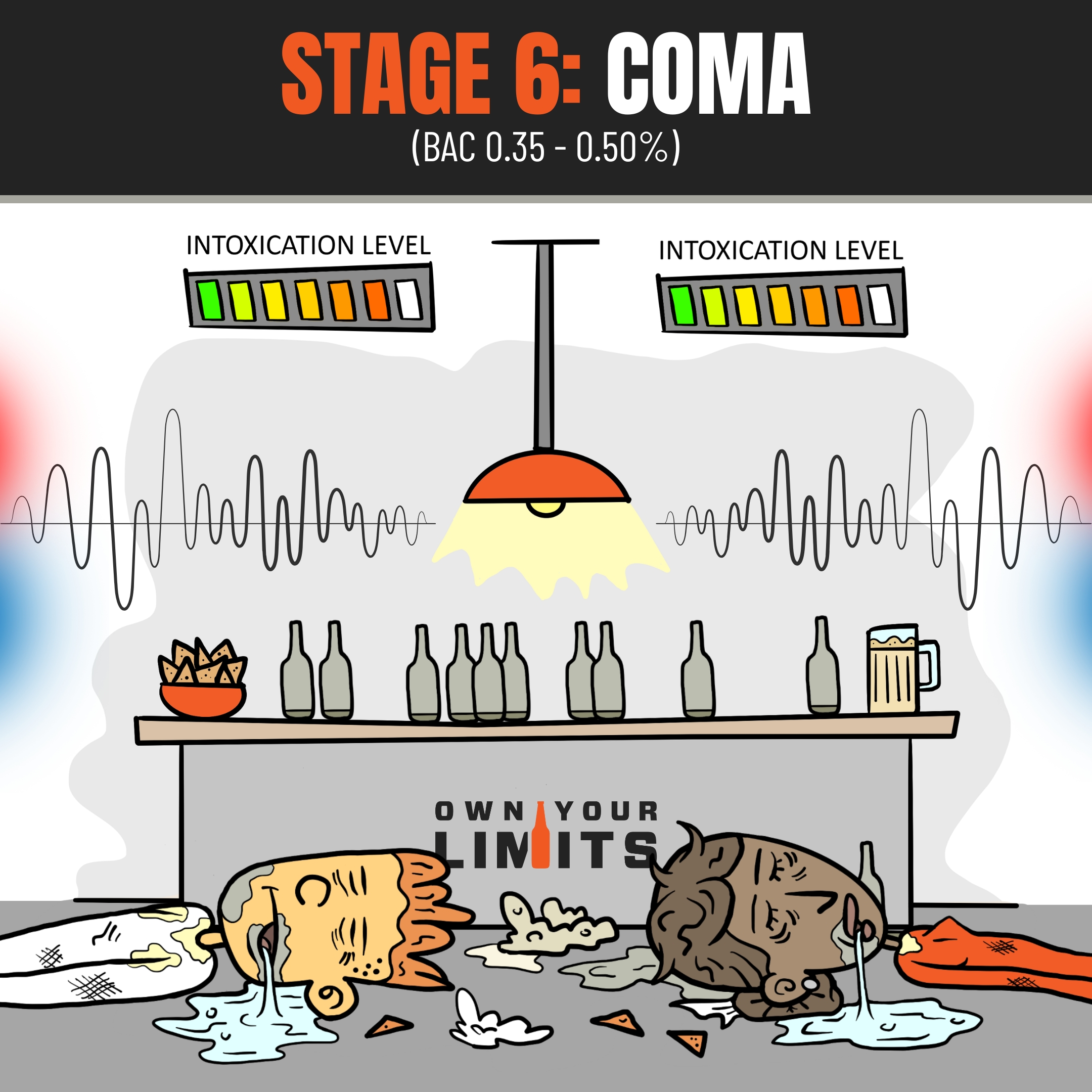
- Unconscious.
- Depressed reflexes (i.e., pupils do not respond appropriately to changes in light).
- Decrease in body temperature and heart rate.
- Risk of going into a coma (and possibly dying) due to compromised respiration and circulation, motor responses and reflexes.
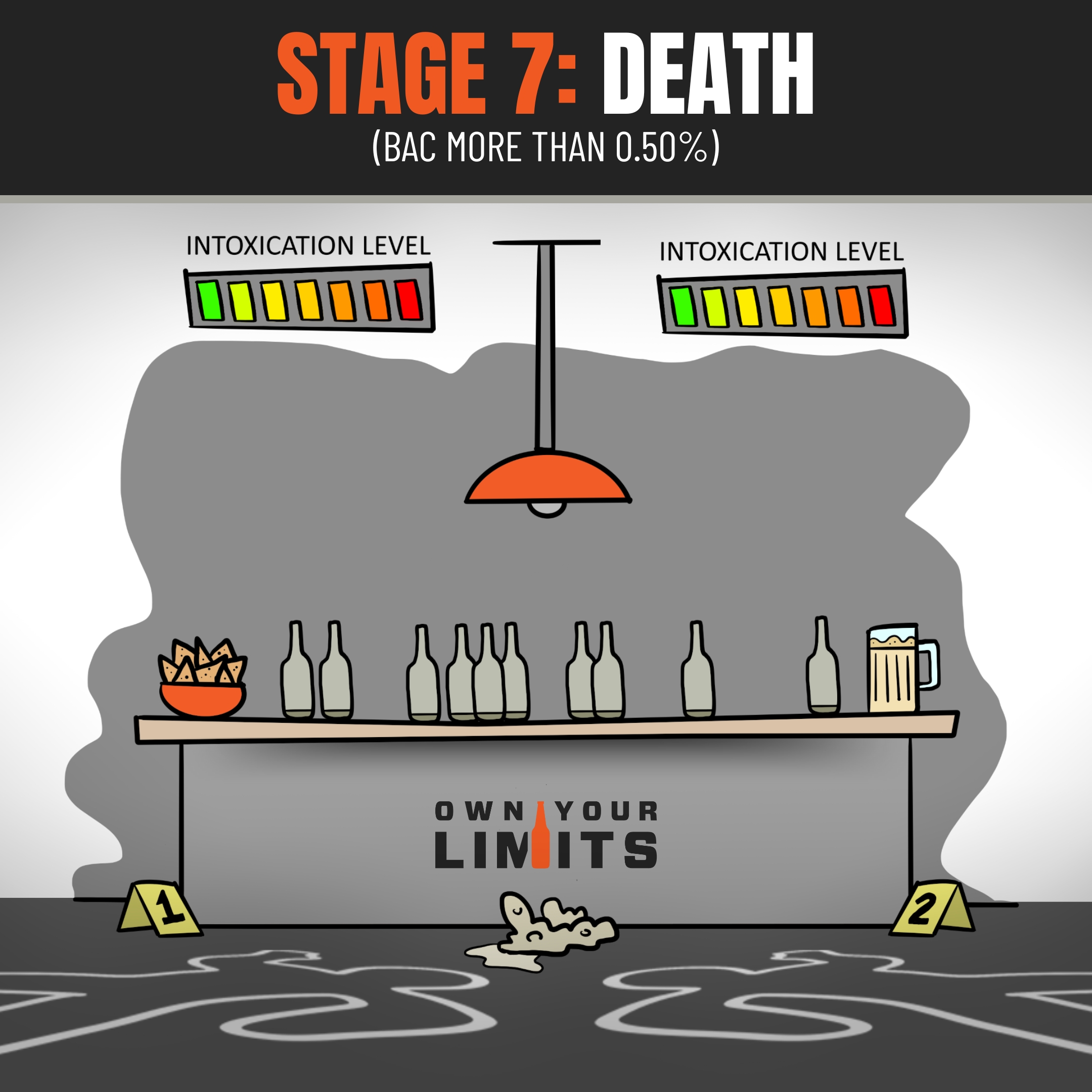
- High risk of death due to alcohol poisoning or failure of the brain to control the body’s vital functions.
Resources
If you need help to quit or limit your drinking, the Department of Defense provides screenings to help identify what type of support you need and what treatment would work best for you. They offer inpatient, partial inpatient and outpatient treatment options.
Military OneSource
Support for Military Personnel & Families | Military OneSource is a DoD supported service offering 24/7 confidential support and are specialized in helping military members, families and veterans. Services are provided CONUS and OCONUS via call-in, live chat and text on their website and mobile app.
Substance Abuse and Mental Health Services Administration
You may also call the U.S. Substance Abuse and Mental Health Services Administration (SAMHSA) National Helpline at 1-800-662-HELP (4357). SAMHSA’s National Helpline is a free and confidential treatment referral and information service (provided in English and Spanish) for individuals and families facing mental and/or substance use disorders and is available 24 hours a day, every day of the year.
Service-Specific Resources
Each Service policy allows you to self-refer or self-identify for potential alcohol misuse or abuse before an incident happens, so you can start getting help. Check out additional resources for Service members here.
- Minimal (or no) observable effects.
- Reaction time, behavior and judgment may be slightly altered.
- Elevated mood.
- Increased self-confidence.
- Impaired judgment.
- Decreased inhibitions.
- Impaired reasoning and memory.
- Legally intoxicated.
- Emotional instability.
- Loss of critical judgment.
- Impairment of memory and comprehension.
- Decreased sensory response.
- Increased reaction time.
- Possible mood swings and/or nausea or vomiting.
- Severe motor impairment.
- Confusion.
- Dizziness.
- Temporary loss of consciousness or short-term memory ("blackouts").
- Needing assistance to walk.
- Barely conscious.
- Inability to stand or walk.
- Vomiting.
- Incontinence.
- Unconscious.
- Depressed reflexes (i.e., pupils do not respond appropriately to changes in light).
- Decrease in body temperature and heart rate.
- Risk of going into a coma (and possibly dying) due to compromised respiration and circulation, motor responses and reflexes.
- High risk of death due to alcohol poisoning or failure of the brain to control the body's vital functions.
Resources
If you need help to quit or limit your drinking, the Department of Defense provides screenings to help identify what type of support you need and what treatment would work best for you. They offer inpatient, partial inpatient and outpatient treatment options.
Military OneSource
Support for Military Personnel & Families | Military OneSource is a DoD supported service offering 24/7 confidential support and are specialized in helping military members, families and veterans. Services are provided CONUS and OCONUS via call-in, live chat and text on their website and mobile app.
Substance Abuse and Mental Health Services Administration
You may also call the U.S. Substance Abuse and Mental Health Services Administration (SAMHSA) National Helpline at 1-800-662-HELP (4357). SAMHSA’s National Helpline is a free and confidential treatment referral and information service (provided in English and Spanish) for individuals and families facing mental and/or substance use disorders and is available 24 hours a day, every day of the year.
Service-Specific Resources
Each Service policy allows you to self-refer or self-identify for potential alcohol misuse or abuse before an incident happens, so you can start getting help. Check out additional resources for Service members here.